


Dental Periotomes: Types, Uses & How to Choose the Right Instrument

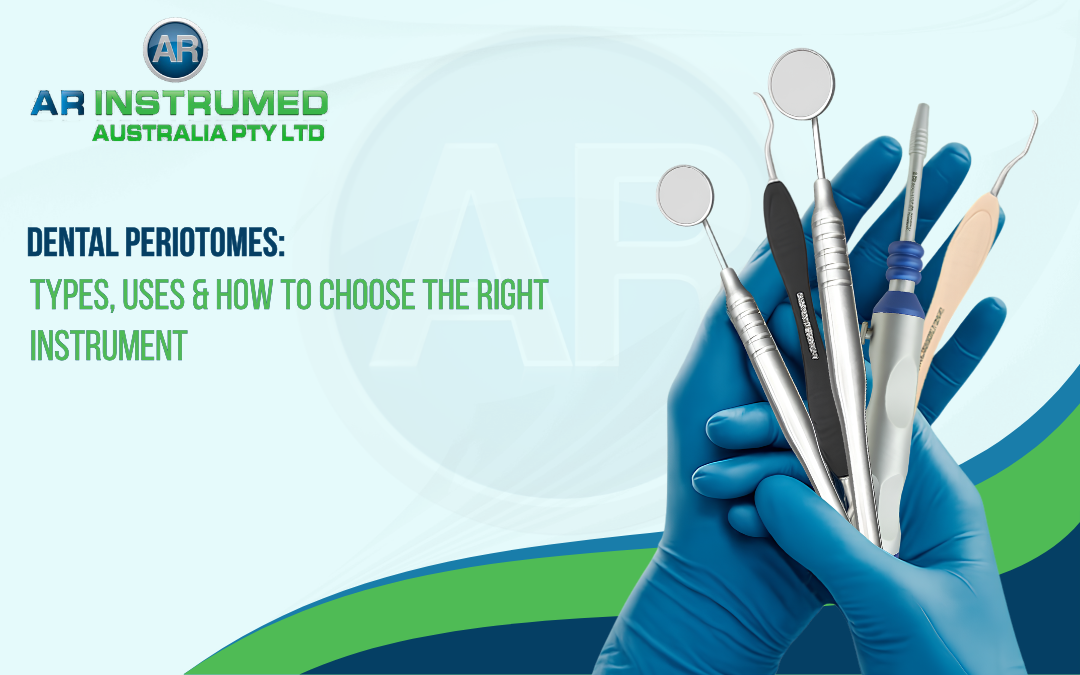
A dental periotome is a slim, blade-like instrument that dentists and oral surgeons slide into the periodontal ligament space to cut the fibres holding a tooth in place. Loosening the tooth this way before forceps or elevators are used supports atraumatic tooth extraction and helps protect the surrounding socket. This guide covers the main uses and designs of dental periotomes, how they differ from luxators, and what to check before you buy.
What Are Dental Periotomes Used For?
Periotomes are used early in an extraction to sever the periodontal ligament and reduce the force needed later. Clinicians commonly choose one for:
- Atraumatic extractions, where preserving socket bone and gingival tissue is a priority
- Extractions planned ahead of implant placement or socket preservation
- Sites with limited access or thin surrounding bone, where bulkier instruments are harder to position
A periotome doesn’t replace forceps or elevators. It is one step in a sequence, and case selection and technique remain the treating practitioner’s clinical decision.
Types of Dental Periotomes
Designs vary between manufacturers, so there is no single universal classification. These are the differences buyers meet most often:
- Tip shape. Straight tips are generally simpler to position on accessible surfaces. Curved or angled tips may help reach proximal or posterior areas.
- Blade width. This is usually listed in millimetres. AR Instrumed Australia’s current periotome range includes 2 mm and 3 mm options, so check each product page for what the measurement refers to.
- Flexibility. Some designs are described as flexible and others are more rigid. This is largely a handling preference, and the manufacturer’s guidance on force still applies.
- Handle design. Shape, length, grip and any colour coding affect control and instrument identification in a tray.
Periotome vs Luxator: What’s the Difference?
Both instruments work on the periodontal ligament, and the terms are sometimes used loosely. In practice, the difference usually comes down to blade design:
| Comparison | Dental Periotome | Luxator |
|---|---|---|
| Typical Blade | Thin and narrow, often flexible. | Generally broader and more rigid, with a sharpened, often slightly concave edge. |
| Main Purpose | Sever the periodontal ligament with minimal pressure on the surrounding bone. | Sever and widen the ligament space to help luxate the tooth. |
| Compare Before Buying | Blade thickness, tip shape, and flexibility. | Blade width, edge design, and handle. |
Designs overlap and naming isn’t standardised. Compare actual blade dimensions and the manufacturer’s intended-use description rather than relying on the name alone. If you need both, AR Instrumed also lists luxators in its silicone instruments range.
How to Choose a Dental Periotome
No single periotome suits every case. Work through these points:
- Clinical application. Match the instrument to your typical extractions: anterior or posterior, single or multi-rooted, routine or implant-planned.
- Tip design and access. Decide whether straight, curved or both will reach your common sites. Many practices keep one of each.
- Handling. Check handle shape and length, and whether the blade’s flexibility suits how you work.
- Material and finish. Look for the manufacturer’s stated material and finish, and confirm they suit your reprocessing method.
- Instructions for use. Follow the manufacturer’s guidance on use, force, cleaning and sterilisation. Thin blades can be damaged by misuse, so inspect instruments before each use.
What to Check Before Buying Dental Periotomes
Before ordering, confirm:
- Specifications: tip shape, blade dimensions, overall length and handle type
- Intended use: that the manufacturer positions the instrument for dental extraction work
- Reprocessing: cleaning, disinfection and sterilisation instructions, and whether it is supplied sterile or needs reprocessing before first use
- Supplier information: Australian contact details, returns and claims processes, and documentation available on request
AR Instrumed Australia is based in Horsley, NSW. Product questions are welcome through our contact page.
Individual Buyers vs Clinics, Hospitals and Dealers
Individual practitioners and small practices usually compare a few specific items and order small quantities. Clinics, hospitals, dental schools and training institutions often need consistent specifications across many dental surgical instruments, standardised trays and repeat supply. Dealers and distributors also weigh range, ordering terms and ongoing support. Volume terms, lead times and delivery should always be confirmed directly with the supplier.
Explore Relevant Dental Instruments
AR Instrumed Australia is a dental instruments supplier in Australia. If you’re looking to buy dental periotomes, you can browse dental periotomes and compare the listed tip shapes and sizes. You can also explore dental extraction instruments, including forceps and elevators. If you have a question about a specification, get in touch before you order.
Wholesale and Dealer Enquiries
Clinics, hospitals, dealers, distributors and bulk buyers can submit a dealer enquiry to discuss quantities, specifications and ongoing supply needs.
Frequently Asked Questions
What is a dental periotome used for?
It severs the periodontal ligament around a tooth at the start of an extraction, reducing the force needed and supporting a more conservative approach.
What is the difference between a periotome and a luxator?
Both work on the periodontal ligament. Periotomes typically have thinner, narrower, often flexible blades, while luxators are generally broader and more rigid. Designs vary, so compare dimensions and manufacturer descriptions.
How do dentists choose a periotome?
Mainly by clinical application, tip shape (straight or curved), blade width, flexibility, handle design and the manufacturer’s instructions for use.
Can a periotome replace forceps or elevators?
No. It usually forms the first step of an extraction sequence, and technique is a clinical decision for the practitioner.
What should I check before buying dental periotomes in Australia?
Check specifications, intended use, cleaning and sterilisation instructions, and supplier contact and support details.