


Best Composite Placement Instruments for Dentists: Buyer’s Guide (2026)

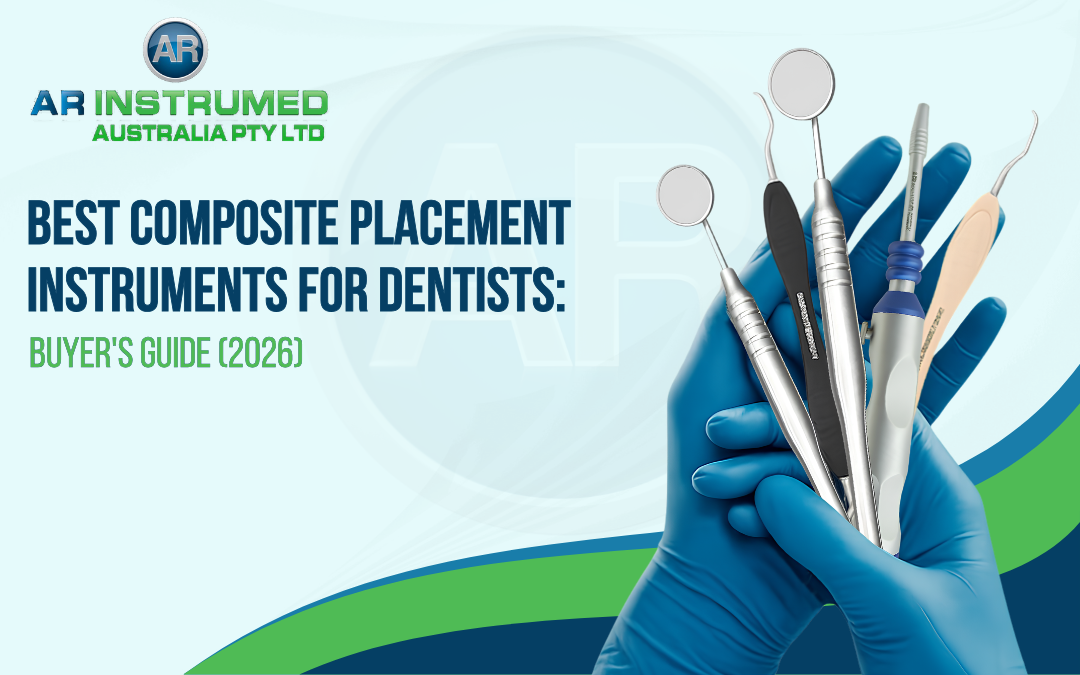
Choosing the right composite placement instruments can make or break the finish of a restoration. If you’ve ever fought a sticky composite mid-procedure or struggled to get a smooth anatomical contour under time pressure, you already know that instrument quality isn’t a small detail it’s clinical performance. For dentists across Australia looking to buy composite placement instruments Australia-wide, this guide breaks down what actually matters before you add anything to cart.
Composite placement instruments are hand instruments used to carry, shape, condense, and contour composite resin during direct restorations. They typically feature titanium-coated or PTFE-coated working tips designed to resist composite sticking, paired with ergonomic handles that reduce hand fatigue during longer procedures.
Unlike general dental hand instruments, these are purpose-built for restorative dentistry every angle, tip shape, and coating exists to help you place composite faster, with better anatomical accuracy and fewer touch-ups.
Why Choosing the Right Instrument Matters
The wrong instrument doesn’t just slow you down it affects the final result. Composite that sticks to the tip drags and creates voids. A handle that isn’t balanced properly adds strain over a full clinic day. And instruments without the right tip geometry make it harder to sculpt natural-looking anatomy, especially in anterior restorations where aesthetics are non-negotiable.
For restorative and cosmetic dentists, this translates directly into chair time, patient outcomes, and repeat business. Investing in premium dental instruments Australia-wide isn’t a luxury it’s a practical decision that protects your workflow.
Features to Look for Before Buying
Before you buy composite placement instruments, check for:
- Non-stick composite instruments titanium nitride or PTFE coatings prevent resin adhesion and reduce clean-up time
- Ergonomic composite placement instruments balanced, lightweight handles that reduce hand and wrist fatigue
- Corrosion-resistant, autoclavable construction essential for Australian sterilisation standards
- A range of tip shapes flat plastics, ball burnishers, and condensers for different restoration stages
- Consistent tip precision instruments that hold their shape and edge after repeated sterilisation cycles
Skipping any of these usually means replacing instruments sooner, or compromising on the restoration itself.
Different Types of Composite Placement Instruments
Most composite filling instrument sets include a combination of:
- Composite placement/carving instruments for initial placement and rough shaping
- Ball burnishers for smoothing and contouring surfaces
- Flat plastic instruments for layering and adapting composite to cavity walls
- Interproximal carvers for tight contact areas
- Condensers for packing composite into deeper preparations
A well-rounded restorative dental instruments Australia toolkit usually pairs two or three tip variations rather than relying on a single all-purpose tool, giving you more control across different case types.
Common Mistakes Dentists Make When Buying
Even experienced clinicians run into avoidable issues when purchasing composite instruments:
- Buying on price alone cheaper stainless tips without proper coating stick to composite and wear out fast
- Ignoring handle ergonomics leads to fatigue on high-volume restoration days
- Not checking sterilisation compatibility some coatings degrade quickly under repeated autoclaving
- Overlooking supplier reliability inconsistent stock or slow delivery disrupts scheduling
- Buying single instruments instead of a set often costs more long-term than a complete composite filling instrument set
Avoiding these mistakes usually comes down to buying from a supplier that specialises in dental hand instruments Australia-wide, rather than a general medical supplier.
Why Australian Dentists Choose Premium Instruments
Australian practices operate under strict sterilisation and infection-control standards, which makes instrument durability just as important as performance. Premium composite instruments are built to withstand repeated autoclave cycles without losing tip precision or coating integrity something budget alternatives often can’t guarantee.
There’s also a clinical efficiency factor. Professional composite instruments with proper non-stick coatings reduce chair time per restoration, which adds up meaningfully across a busy practice week.
Where to Buy Composite Placement Instruments in Australia
If you’re searching for where to buy composite placement instruments in Australia, AR Instrumed Australia is worth a look. AR Instrumed is one of Australia’s trusted suppliers of premium dental and surgical instruments, offering a solid range of restorative and composite placement instruments alongside broader dental kits.
Their catalogue is built around consistent quality, competitive pricing, and fast delivery across Australia practical advantages when you’re restocking instruments for an active clinic rather than sourcing a one-off tool. Browsing their range at ar-instrumed.com.au is a straightforward way to compare titanium-coated composite instruments and full sets side by side.
Final Thoughts
The right composite placement instruments directly affect how efficiently you work and how your restorations turn out. Whether you’re upgrading a single instrument or building out a full composite filling instrument set, prioritising coating quality, ergonomics, and sterilisation durability will save you time and money over the life of the instruments.
Ready to upgrade your kit? Explore the full range of composite placement instruments and restorative dental instruments at AR Instrumed Australia and find the right set for your practice.
Explore AR Instrumed AustraliaFrequently Asked Questions
What are composite placement instruments used for?
They’re used to carry, place, shape, and contour composite resin during direct restorations, helping dentists achieve accurate anatomy and smooth surfaces before curing.
Which composite placement instrument is best for restorative dentistry?
Most restorative dentists rely on a set rather than one tool typically a placement instrument, a ball burnisher, and a flat plastic instrument to cover shaping, contouring, and layering in a single case.
How do I choose high-quality composite instruments?
Look for non-stick titanium or PTFE-coated tips, ergonomic handles, autoclave-safe construction, and consistent tip precision after repeated sterilisation.
Where can I buy composite placement instruments in Australia?
Specialist suppliers like AR Instrumed Australia offer dedicated composite and restorative instrument ranges with Australia-wide delivery, which is generally more reliable than sourcing from general medical suppliers.
How should composite placement instruments be cleaned and maintained?
Rinse off uncured composite immediately after use, follow standard pre-sterilisation cleaning protocols, and autoclave according to manufacturer instructions to protect the tip coating and handle integrity.